Why 55 MPH Is the Smartest Speed You're Probably Not Using
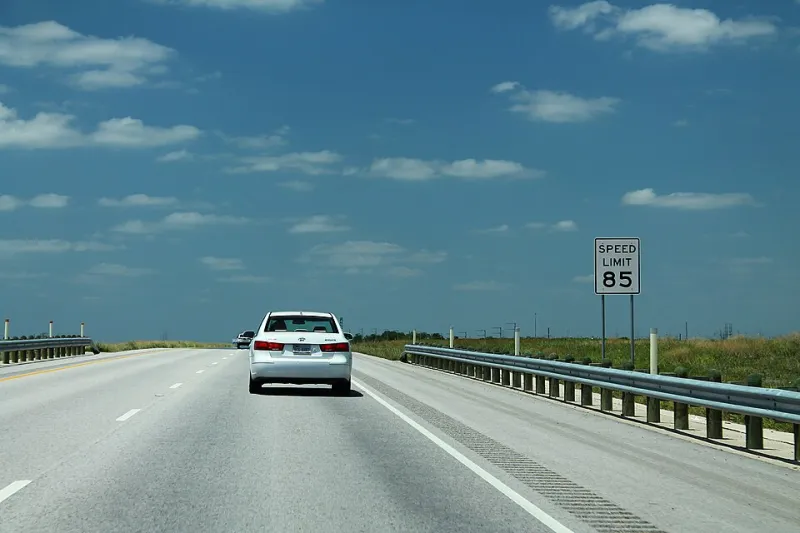
Photo: formulanone, CC BY-SA 2.0, via Wikimedia Commons
There's a quiet war happening on American interstates, and it's not between trucks and sports cars. It's between what feels fast and what actually saves you money. Most drivers cruise somewhere in the 70-to-80 MPH range, convinced they're striking a reasonable balance between efficiency and not getting passed by everyone on the highway. But when you run the actual numbers — fuel economy curves, engine stress data, tire wear rates — a different speed keeps showing up at the top of the leaderboard: 55 MPH.
Before you roll your eyes, hear this out. We're not here to lecture about speed limits or make a political point. This is pure math, pure engineering, and pure dollars. And the case for 55 is a lot stronger than most people realize.
The Physics Nobody Explains at the Dealership
Aerodynamic drag is the villain of this whole story. The relationship between speed and drag isn't linear — it's exponential. Specifically, drag increases with the square of your velocity. That means going from 55 MPH to 70 MPH doesn't just add a little drag. It nearly doubles it. Jump to 80 MPH, and your engine is fighting roughly twice the resistance it faced at 55.
Your engine doesn't care what the speed limit says. It cares about load. Every time drag increases, the engine has to burn more fuel to maintain speed. Cruise control makes this invisible to you because the system handles the throttle automatically, but the fuel consumption is absolutely happening in the background.
The EPA's own testing methodology acknowledges this relationship. That's why highway fuel economy ratings are typically calculated at speeds closer to 55-60 MPH. When you're cruising at 75 on the freeway, you're almost certainly getting fewer miles per gallon than the window sticker promised — sometimes 15 to 20 percent less.
Where the Efficiency Curve Actually Peaks
Every engine has what engineers call a "brake specific fuel consumption" sweet spot — a narrow RPM range where it converts fuel to motion most efficiently. For most modern passenger vehicles, that range lands somewhere between 1,500 and 2,500 RPM under light load. At 55 MPH on a flat highway with cruise control engaged, most four-cylinder and V6 engines sit comfortably inside that window.
Push to 70 MPH, and you're typically adding 400-600 RPM. That might not sound like much, but it pulls the engine out of its efficiency zone and into a range where combustion is less complete and fuel consumption climbs faster than speed does. You're going 27 percent faster but burning fuel at a rate that outpaces that gain.
Automatic transmissions compound this effect. At 55 MPH, most modern 8- or 9-speed automatics are locked into their highest gear with the torque converter fully engaged. At 75 MPH, depending on grade and load, some vehicles will briefly drop a gear to maintain speed — burning significantly more fuel for those intervals even with cruise control active.
What This Means for Long-Term Engine Wear
Fuel efficiency is the headline, but engine longevity is where 55 MPH really separates itself. Operating at lower RPMs under cruise control reduces thermal stress on critical components. Piston rings, valve seats, and cylinder walls all experience less friction-induced wear when the engine isn't being pushed into its upper operating range hour after hour.
Consider a driver doing 25,000 highway miles per year — not unusual for a commuter or road trip enthusiast. Running those miles at 55 MPH versus 75 MPH could mean the difference of hundreds of thousands of engine revolutions annually. Over a 150,000-mile vehicle lifespan, that differential accumulates into meaningful wear reduction.
Tire wear follows a similar curve. Tires generate heat through friction, and heat is what degrades rubber compounds over time. Higher speeds mean more heat generation per mile, which translates to shorter tire life. At 55 MPH with cruise control maintaining a steady load, tires run cooler and last longer — sometimes significantly longer depending on the tire compound.
Running the Real Numbers
Let's put some actual figures to this. Take a mid-size sedan averaging 32 MPG at 55 MPH and 26 MPG at 75 MPH. At $3.50 per gallon, a 500-mile road trip costs roughly $54 at 55 MPH and about $67 at 75 MPH. That's $13 saved on a single trip. Do that four times a year and you've saved $52 — enough to cover a decent set of wiper blades and then some.
Now add in the extended tire life, reduced oil consumption from lower thermal stress, and fewer miles logged against your engine's wear clock. Some automotive economists estimate the total cost-of-ownership advantage of consistent 55 MPH highway cruising over 75 MPH at several hundred dollars per year for a typical driver. Over five years of ownership, that's real money.
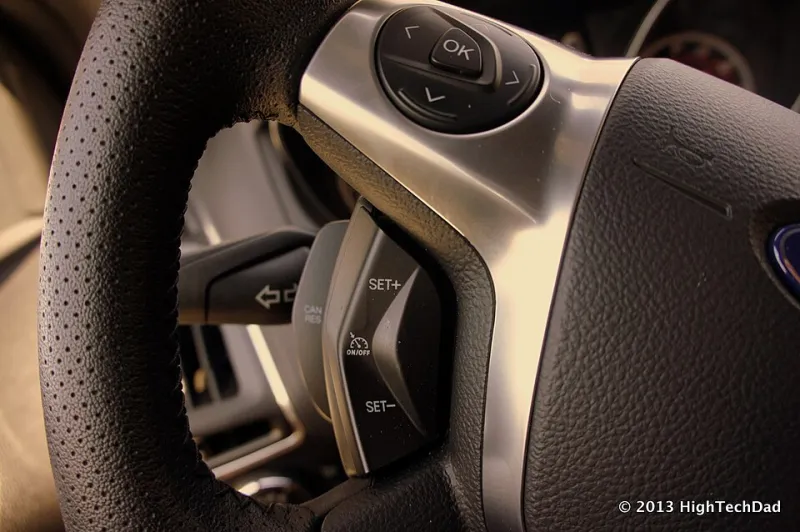
Cruise control is the tool that makes 55 MPH actually sustainable. Without it, speed creep is almost inevitable — your foot gets heavy, you drift to 60, then 65, and the efficiency gains evaporate. Set the cruise at 55, lock it in, and let the system do the work.
The Practical Reality: When 55 Works and When It Doesn't
Let's be honest. Cruising at 55 MPH on a 70 MPH interstate during peak traffic hours is going to create friction — literally and socially. There are stretches of highway where the practical minimum speed is faster, and there are situations where matching traffic flow is the safer call.
But 55 MPH shines on less-trafficked routes, two-lane highways, and off-peak interstate driving. Rural stretches of I-40, the Great Plains sections of I-80, early morning runs on I-10 — these are the environments where dialing back to 55 with cruise control engaged costs you almost nothing in time but pays real dividends in efficiency.
If 55 feels too conservative for your commute, even dropping from 75 to 65 MPH captures a meaningful portion of the efficiency benefit. The drag curve means that every MPH you shed from the top end of your speed range delivers more savings than the same reduction at lower speeds.
The Takeaway
Your cruise control is only as smart as the speed you set it to. The system can maintain perfect throttle discipline, optimize gear selection, and eliminate speed variance — but if you're feeding it 78 MPH, you're leaving efficiency on the table regardless of how well the technology performs.
The engineering case for 55 MPH isn't nostalgia. It's physics, thermodynamics, and basic economics working together. Set the cruise, pick a smarter number, and watch what happens to your fuel receipts over the next six months. The data has a way of being pretty convincing.