Cruise Control Is On — But Is Your Brain Still in the Car?
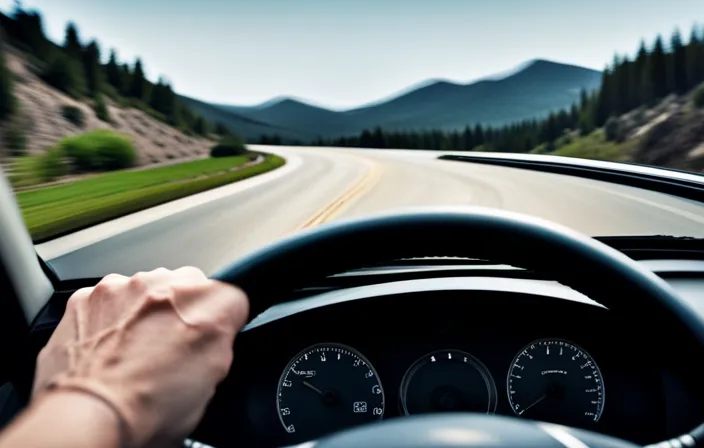
Photo: driver distracted highway cruise control hands on wheel looking away, via voyagerinfo.com
You're three hours into a long highway stretch, cruise control locked at 68 MPH, and you've just realized you spent the last four minutes mentally redecorating your living room. Sound familiar? Don't feel too bad — it's not laziness. It's neuroscience. And it's one of the more underappreciated safety conversations in the whole world of driver assistance technology.
Cruise control is genuinely useful. It reduces fatigue, improves fuel economy, and takes one variable off your plate during monotonous highway miles. But there's a catch that nobody in the marketing materials bothers to mention: the same automation that makes long drives easier also creates the psychological conditions for distraction to creep in. Understanding why that happens — and what to do about it — is worth a few minutes of your attention.
The Automation Paradox
Cognitive psychologists have a term for what happens when humans hand a task to a machine: automation complacency. It describes the well-documented tendency to reduce monitoring effort when a system appears to be handling a task competently. The more reliable the automation, the more pronounced the complacency effect.
Cruise control is very reliable. It doesn't drift, it doesn't get distracted, it doesn't miss speed changes. That reliability is precisely what makes it dangerous from an attention standpoint. Your brain, operating on energy-conservation principles it developed over millions of years, interprets a smooth, uneventful highway environment with cruise control engaged as a signal that less vigilance is required.
Research published in traffic safety literature has found that drivers using cruise control on monotonous roads show measurable reductions in eye movement scanning behavior — they look at fewer distinct points in their visual field and spend longer periods focused on a single location. In practical terms, that means they're slower to detect hazards at the edges of their attention.
Hands-Free Is Not the Same as Heads-Clear
This is the distinction that gets lost in popular conversation about driver assistance technology. Cruise control keeps your foot off the pedal, but it does nothing to keep your mind on the road. In fact, the physical relaxation it enables — the absence of pedal input, the reduced need for micro-corrections — sends your nervous system a signal that's essentially the opposite of alertness.
There's also a secondary task problem. Studies examining driver behavior during cruise control use consistently find higher rates of secondary task engagement — phone use, eating, extended conversations, even reading. The logic drivers use, whether consciously or not, goes something like this: "The car is handling the speed, so I have a free hand and a little bandwidth to spare."
The problem is that highway driving doesn't actually free up cognitive bandwidth the way sitting at a desk does. The environment is dynamic. Merge zones appear. Vehicles brake unexpectedly. Road debris materializes. Reaction time requirements don't decrease just because your foot is resting on the floor.
What Traffic Safety Researchers Are Seeing
Transportation safety researchers have been tracking the behavioral effects of driver assistance systems for over a decade, and the cruise control data is instructive. Studies from institutions including the AAA Foundation for Traffic Safety have noted that drivers demonstrate longer brake reaction times when transitioning from cruise-control-engaged driving to manual control — particularly after extended periods of automation use.
This "out-of-the-loop" problem is significant. The longer you've been passively monitoring a situation rather than actively managing it, the slower your response when the situation suddenly demands manual intervention. On a highway where closing speeds between vehicles can exceed 30 MPH, even a half-second delay in reaction is meaningful.
Adaptive cruise control — the version that manages following distance in addition to speed — actually amplifies this effect in some research contexts. Because it handles more of the driving task, it creates deeper cognitive disengagement. Drivers using ACC have been observed spending more time looking away from the road than those using conventional cruise control.
The Phone Factor
Let's be direct about something. Cruise control and smartphone use have developed a troubling relationship on American highways. The physical act of lifting your foot off the accelerator creates a psychological permission slip for some drivers — a sense that because one system is automated, the overall driving task is somehow less demanding.
It isn't. Reaction time research is consistent on this point: any secondary task that draws visual attention away from the road, even briefly, degrades hazard detection. Cruise control doesn't change the stopping distance of your vehicle. It doesn't shorten the time required to process a threat and respond. It simply handles one narrow aspect of vehicle control while leaving everything else exactly as demanding as it was before.
Practical Strategies for Staying Mentally Present
The goal isn't to avoid cruise control — it's genuinely useful technology. The goal is to use it without letting it become a permission slip for mental checkout. A few approaches that actually work:
Set active scanning intervals. Every 30 seconds or so, consciously run a visual scan — mirrors, road ahead, instrument cluster. It sounds mechanical, but it interrupts the passive monitoring mode your brain defaults to and keeps threat-detection systems engaged.
Use audio strategically. Podcasts and audiobooks that require active comprehension keep more of your brain occupied than background music. If you're following a complex narrative, you're less likely to start mentally redesigning your kitchen.
Change the cruise setting periodically. Deliberately adjusting your set speed by a few MPH every 20-30 minutes creates a small active task that interrupts complacency. It also slightly varies the driving environment, which helps with alertness.
Take the breaks the research recommends. The Federal Motor Carrier Safety Administration recommends breaks every two hours for commercial drivers — and there's solid cognitive science behind that number. Attention degrades measurably after 90-120 minutes of monotonous driving. Cruise control doesn't change that timeline.
Avoid secondary tasks entirely. This one's obvious but worth stating plainly. Cruise control does not make phone use safer. The research on this is not ambiguous.
The Bottom Line
Cruise control is a tool, not a co-driver. It handles one specific job — maintaining a set speed — and it does that job well. What it doesn't do is monitor the road, assess hazards, or keep your attention from wandering toward your grocery list.
The drivers who get the most out of cruise control are the ones who understand its actual scope. They use it to reduce physical fatigue while staying mentally present, not as an invitation to disengage. That distinction is the difference between a safety feature and a false sense of security — and on a highway at 70 MPH, that's a distinction worth keeping sharp.