What 18-Wheelers Know About Cruise Control That You Don't
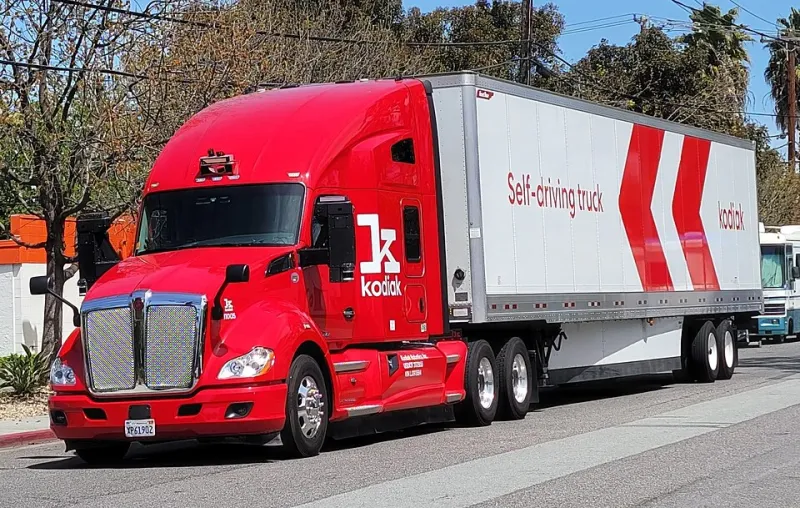
Photo: Votpuske, CC BY-SA 4.0, via Wikimedia Commons
Somewhere on I-80 in Wyoming right now, a trucker is doing something you're not: thinking about momentum. Not speed — momentum. The difference between those two words is basically the whole story of what professional drivers can teach the rest of us about cruise control.
I spent a few weeks talking to long-haul drivers and fleet safety managers about how they actually manage speed across a million-mile career. What I found surprised me: truckers use cruise control less than you'd think, and more deliberately than you'd believe.
The Big Secret: Truckers Turn It Off a Lot
"Cruise is for the flat, boring stretches," Dave, a driver out of Joplin, Missouri, told me over a truck stop phone call. "Kansas, sure. West Texas, sure. The second I see a hill sign or traffic bunching up, my foot's back on the pedal."
That's not old-fashioned stubbornness — it's physics and money. A loaded semi can't accelerate like a car, so cruise control on rolling terrain means the engine hunts for gears, burns extra fuel, and sometimes picks the wrong gear at the worst moment. Most experienced drivers manage grades by hand, building speed before a climb and letting the truck coast down the other side rather than fighting gravity with the brakes.
Your car has the same physics, just smaller. If your commute crosses hilly terrain, try driving the rollers manually and reserving cruise for the flat parts. Your fuel economy will likely thank you.
Engine Braking: The Habit Worth Stealing
Ask a trucker about downhills and you'll hear about "jake brakes" — engine compression braking that slows the rig without touching the friction brakes. The professional rule of thumb: brakes are for emergencies and final stops, not for managing speed on long grades.
You can copy this in any car. Downshift (or use your automatic transmission's manual mode or low gear) on long descents, and let engine braking hold your speed instead of riding the brake pedal. It saves your brakes, prevents the fade that turns scary on mountain passes, and works beautifully alongside — or instead of — cruise control.
The Fleet Manager's View: Cruise On, Brain On
Fleet safety managers are mostly pro-cruise control, with a catch. "Our telematics data shows smoother speeds and fewer speeding violations when drivers use adaptive cruise on the highway," one manager for a Midwest refrigerated carrier told me. "But we've also had incidents where a driver treated it like autopilot. The rule we drill: cruise manages speed. You manage everything else."
Modern adaptive cruise in a car does something truck systems can't — it brakes for the vehicle ahead. But the mindset transfers perfectly: the tech handles the throttle, you handle the scanning, the gaps, and the decisions.
The Dangerous Habit: Set It and Forget It
Every driver I spoke with had a story. The worst came from a driver who described following cruise control down a foggy stretch of I-40 at night, trusting the system, and nearly piling into a stopped queue of traffic that his system detected too late. He made it. His bumper didn't.
The lesson the industry has learned, sometimes painfully: cruise control — even adaptive — has detection limits. Fog, heavy rain, sun glare, and cut-off curves can all defeat it. Professional drivers disable it in conditions where visibility or traffic behavior gets unpredictable. Commuters should too.
The Habits Worth Copying
Here's the trucker playbook, translated for your sedan or SUV:
- Use cruise on flat, open highway; go manual on hills and in traffic.
- Let gravity work on downhills — engine braking beats brake-riding every time.
- Build momentum before climbs instead of letting the system floor it mid-grade.
- Leave bigger following gaps than the car suggests. Truckers run long gaps because stopping distance is survival. Your four-second rule is a good start.
- Treat every system limit as a hard limit. If the sensors can't see clearly, neither can the cruise control.
The Bottom Line
Truckers aren't anti-technology — the best ones are among the most tech-fluent drivers on the road. What they have that most of us lack is respect for the tool's edges. Cruise control is a throttle assistant, not a guardian angel.
Drive smarter. Go farther. And when the road gets interesting, take your foot off the button and put it back on the pedal — just like the pros do.