The Speed Sweet Spot: What Real Highway Data Says About Cruise Control Performance
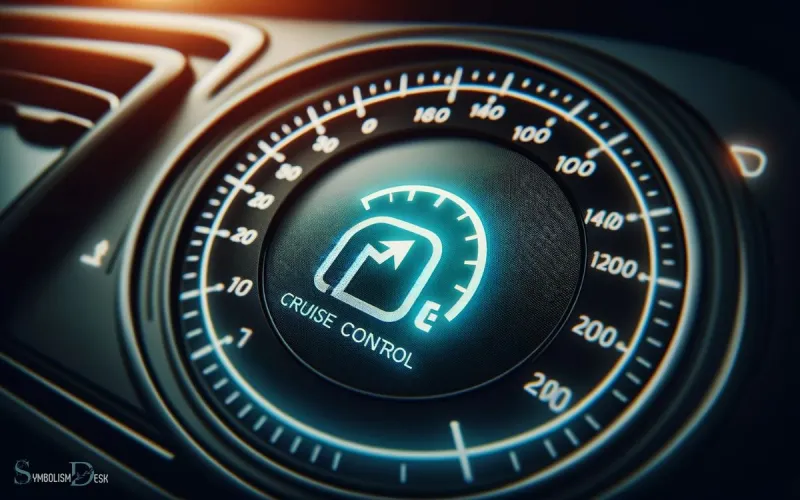
Photo: highway speedometer cruise control dashboard data, via symbolismdesk.com
There's a belief baked into American driving culture that faster is always better — or at worst, a neutral trade-off. You set your cruise, you pick up a few extra miles per hour, and you get where you're going sooner without really thinking about the cost. But when you start pulling actual performance data on how cruise control systems behave across different speed thresholds, that assumption starts to crack pretty quickly.
This isn't about speed limits or highway patrol. It's about physics, fuel, and what your drivetrain is quietly going through while you sip your gas station coffee.
What the Data Actually Shows
Fuel economy curves for most passenger vehicles — sedans, crossovers, light trucks — tend to peak somewhere in the 45–60 mph range and then drop off as speed climbs. That part isn't news. What's less talked about is how steeply efficiency falls once you cross into the 70–80 mph zone, and what that means specifically when cruise control is holding the throttle steady.
The U.S. Department of Energy has published data showing that fuel economy can drop by as much as 7–14% going from 65 mph to 75 mph, and another significant chunk going from 75 to 80. Aerodynamic drag — which increases with the square of your speed — is the main villain here. At 75 mph, your engine isn't working 15% harder than it was at 65; it's working considerably more than that to push through the air resistance.
Cruise control doesn't change those physics. What it does is enforce them with mechanical consistency. Every small hill, every slight headwind, every lane change that disrupts your aerodynamic profile gets a throttle response from the system. At 65 mph, those corrections are modest. At 78 mph, they're more aggressive, and your fuel economy starts swinging more visibly.
Engine Strain: The Quiet Accumulation
Here's where it gets interesting from a long-term ownership perspective. Cruise control at higher speeds doesn't just cost you more at the pump — it asks more of your engine on a sustained basis.
When you're holding 75–80 mph on cruise, your engine is operating closer to its upper efficiency band for extended periods. For most naturally aspirated four-cylinders, that means running at higher RPMs than the engine's torque peak, which is typically in the 2,000–3,500 RPM range. Turbocharged engines handle it a bit differently, but they bring their own set of considerations around heat and boost pressure during long steady-state runs.
The issue isn't any single trip — it's the accumulation. Mechanics who service high-mileage highway vehicles will tell you there's a real difference between an engine that spent most of its life cruising at 65 and one that was routinely held at 78 by an aggressive cruise control setting. Thermal stress, oil breakdown rates, and wear on valve train components all respond to sustained high-RPM operation.
None of this means your car will fall apart. It means the trade-off is real, and most drivers never factor it into the "faster = better" equation.
Stability: The Variable Nobody Talks About
Vehicle stability at cruise control speeds is another area where the data gets uncomfortable for the "just go faster" crowd.
Modern adaptive cruise control systems use radar and camera data to maintain following distance, which means they're also managing speed fluctuations in real time. At 65 mph, those micro-adjustments — small throttle lifts, brief braking events — are well within the system's comfortable operating range. The physics allow for smooth corrections.
At 78 or 80 mph, the margin shrinks. A sudden slow-down from the vehicle ahead triggers a more aggressive response from the adaptive system. Braking forces are higher. The gap between "normal operation" and "emergency intervention" compresses. Lane stability also becomes more sensitive to crosswinds, road surface irregularities, and tire condition at higher speeds — factors that cruise control can't compensate for the way a fully attentive driver might.
This is especially relevant for drivers running older adaptive cruise systems, which use wider following distance thresholds to compensate for slower sensor response times. Those systems were often calibrated with 65–70 mph as the primary use case.
The Sweet Spot: What the Numbers Point To
So where does cruise control actually perform best? When you triangulate fuel efficiency, engine load, and system stability, the data consistently points to a range of roughly 62–68 mph for most modern passenger vehicles on flat-to-rolling interstate terrain.
In that window:
- Fuel consumption is near its optimal curve without the steep aerodynamic penalty of the upper 70s
- Engine RPMs sit comfortably in the torque-rich zone for most powertrains
- Adaptive cruise systems have enough reaction margin to handle traffic variations smoothly
- Tire wear and heat buildup are more manageable over extended runs
Push into the low 70s and you're making a trade — a modest one, but a real one. Push into the upper 70s and that trade gets more expensive in multiple directions simultaneously.
What This Means for Your Next Long Haul
None of this is an argument for driving 55 in the left lane and annoying everyone around you. It's an argument for being intentional about where you set that cruise control speed, especially on trips where you're covering 400, 500, or 600 miles in a day.
On a 500-mile trip, the difference between cruising at 65 and 75 mph is roughly 46 minutes of travel time. That's not nothing, but it's also not the massive time savings most people imagine. Meanwhile, the fuel cost difference at current gas prices can easily run $8–15 for a typical sedan, more for a truck or SUV.
Factor in the long-term engine considerations, and the math starts looking less like a wash and more like a consistent hidden tax on aggressive cruise control habits.
The smarter play — and the one the data supports — is setting your cruise in that 63–68 mph range on long hauls, bumping up when traffic or road conditions genuinely call for it, and treating the upper 70s as a choice with a real cost attached rather than a free upgrade.
Your car's been trying to tell you this for years. Now you've got the numbers to back it up.