Set to 60, Doing 63: The Cruise Control Accuracy Problem Your Dealer Doesn't Want to Fix
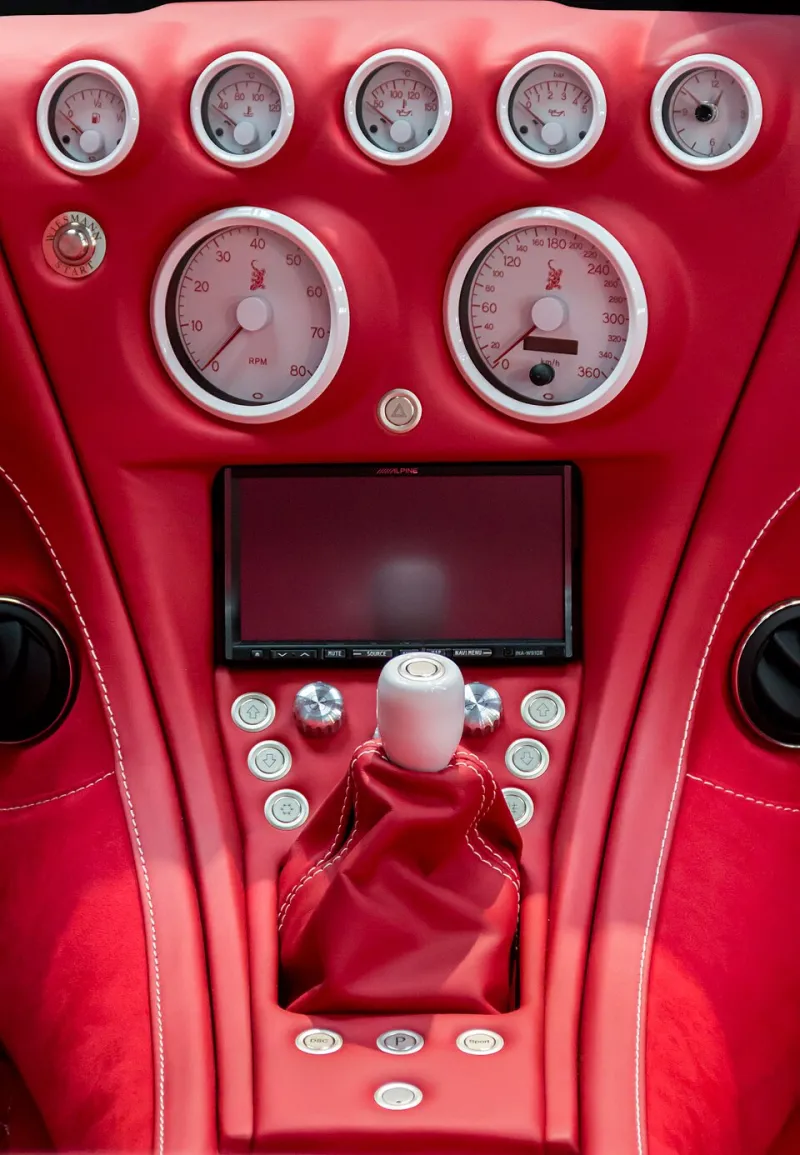
Photo: Dietmar Rabich, CC BY-SA 4.0, via Wikimedia Commons
Something's Off — But Nobody's Talking About It
You set your cruise at exactly 60 mph. You glance at a speed limit sign, then at your speedometer, then at your phone's GPS app. The numbers don't quite match. You shrug it off.
Most drivers do. But that small gap between what your cruise control says and what your vehicle is actually doing is more common than you'd think — and the reasons it persists are part mechanical, part financial, and entirely frustrating.
Why Cruise Control Speed Is Never Perfectly Accurate
Before we get into the shadier corners of this story, it helps to understand why perfect accuracy is genuinely difficult to achieve.
Your vehicle's speedometer — and by extension your cruise control — calculates speed based on wheel rotation. Specifically, it counts pulses from wheel speed sensors and multiplies that by a programmed tire circumference value. Simple in theory. Messy in practice.
Tire size is the first variable. Your cruise control was calibrated at the factory for a specific tire diameter. If you've put on aftermarket wheels, gone up or down a size, or even if your tires are worn significantly compared to new, the circumference your system expects no longer matches reality. A worn tire can be meaningfully smaller in diameter than a fresh one, which means your speed sensors are reporting a higher rotation rate for the same actual ground speed — and your cruise reads faster than you're going.
Then there's the intentional factor. Federal Motor Vehicle Safety Standards allow speedometers to read up to 10% fast, but never slow. Manufacturers build vehicles to read slightly high on purpose — it's a liability buffer. If your speedometer says 60 and you're actually doing 58.5, that's not a defect. It's standard practice.
Cruise control inherits all of this. So when you set cruise at 60 and your GPS clocks you at 57.8 or 62.4, you're seeing the real-world output of layered calibration choices that started on a factory floor.
Where the Dealer Comes In — And Why They Walk Away
Here's where it gets genuinely aggravating.
Owner complaint forums — from F-150 Facebook groups to Toyota Nation to Ram Trucks subreddits — are full of drivers who've brought this issue to their dealerships and been turned away. The responses they get are remarkably consistent:
"That's within spec." "Speedometers are allowed a variance. There's nothing to fix." "If the check engine light isn't on, we can't do anything under warranty."
Sometimes those responses are technically accurate. But they're also financially convenient.
Recalibrating a vehicle's speed sensing system typically requires updating the powertrain control module (PCM) or body control module with corrected tire size parameters — a task that takes a trained technician maybe 30 to 60 minutes with the right software. It's not a huge job. But it's also not billable under most warranty claims because the variance usually falls within manufacturer-allowed tolerances.
That means the dealer absorbs the labor cost with no reimbursement from the manufacturer. So they don't do it. They tell you it's normal. And you drive away still doing 63 when you think you're doing 60.
For the average commuter, this is mildly annoying. For someone running cruise control across a long highway stretch through a speed-trap-heavy state, it's a ticket waiting to happen. And if you're trying to manage fuel economy or EV range against a precise speed target, the inaccuracy quietly undermines your whole strategy.
The Financial Sting You Might Not Have Added Up
Think about what a 2–3 mph variance actually costs over time.
If you're consistently cruising at 63 mph when you intend to travel at 60, you're operating in a less fuel-efficient aerodynamic range than you planned. Aerodynamic drag increases with the square of speed — that gap between 60 and 63 is small but not nothing, especially on long trips.
More pointedly: if you're setting cruise at 72 to stay "under 75" and your system is running 2 mph fast, you're actually doing 74. In states with aggressive enforcement near the 75 mph threshold, that's a meaningful risk difference.
How to Actually Test Your Own Cruise Control Accuracy
The good news is you don't need a dealership's cooperation to figure out what's happening with your system. Here's a practical testing approach:
Step 1: Use a GPS-based speed app. Waze, Google Maps, and dedicated GPS speedometer apps (Speedometer GPS is a solid free option) report speed based on satellite positioning, which is independent of your vehicle's wheel sensors. This gives you a ground-truth reference.
Step 2: Find a flat, straight stretch of highway with light traffic. Set your cruise at a round number — 60 or 65 mph — and let the system stabilize for at least 30 seconds.
Step 3: Note the GPS reading at steady state. Do this multiple times across a trip. If your GPS consistently reads 2–3 mph below your cruise setting, you've confirmed a high-reading variance. If it reads above, you have the rarer low-reading variance.
Step 4: Check your tire size. Compare the tire size currently on your vehicle to the size listed on your door jamb sticker. Any difference is a likely culprit for calibration drift.
Legitimate Fixes That Actually Work
If you've confirmed a meaningful variance, here's what can actually be done:
PCM/BCM recalibration: If your tires are non-stock or you've changed sizes, a dealer or independent shop can update the tire circumference value in your vehicle's control modules. This is the cleanest fix. Expect to pay $75–$150 if they won't cover it under warranty — it's worth it.
Aftermarket tuners: For truck and performance car owners, handheld tuners like the SCT X4 or DiabloSport allow DIY speed calibration adjustments at home. This is a popular fix in the Ford and GM truck communities.
Escalate the warranty claim: If your vehicle is under warranty and the variance exceeds 3 mph, don't accept "within spec" as the final answer. Document your GPS testing, request the specific tolerance specification in writing, and escalate to the manufacturer's customer service line. Documented owner complaints that go through official channels do sometimes result in goodwill repairs.
Third-party speedometer calibration services: Independent shops that specialize in custom tuning can recalibrate speed sensing for almost any modern vehicle. Search for "speedometer calibration" plus your city — this is a real service category with established providers in most metro areas.
What the Fine Print Actually Says
For the record: most manufacturers guarantee speedometer accuracy within plus or minus 4 mph at highway speeds. That's the published spec for many major brands including GM, Ford, and Toyota. Cruise control is generally held to the same tolerance.
So if your cruise is off by 2 mph, you legally have no warranty claim. That's the uncomfortable reality.
But knowing that helps you make smarter decisions — set your cruise a couple mph below your actual target speed, verify with GPS on a new vehicle before assuming the readout is gospel, and don't wait for a dealer to volunteer this information. They won't.
Drive smarter. Know your numbers.