I Set the Cruise and Stopped Gripping the Wheel So Hard — Here's What That Did to Me

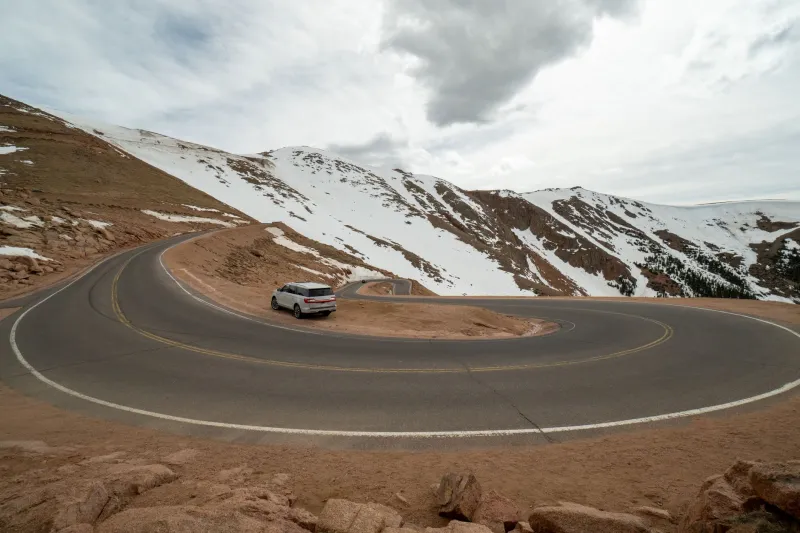
Photo: Steve Jurvetson from Los Altos, USA, CC BY 2.0, via Wikimedia Commons
I want to be upfront about something: I resisted cruise control for years. Not out of ignorance — I knew how it worked. I just had this stubborn conviction that controlling my own speed was part of being a good, attentive driver. Letting the car hold the throttle felt like cheating somehow. Like I was opting out of driving.
I commute 52 miles each way on a mix of interstate and divided highway in the mid-South. Five days a week, sometimes six. That's over 500 miles a week, roughly 26,000 miles a year, almost entirely on roads where cruise control is completely viable.
For three years, I barely used it.
Then I burned out. Not dramatically — just the slow, grinding kind where you arrive home and realize you can't remember the last 20 minutes of the drive. Where your right calf aches in a specific way that only highway driving produces. Where the Sunday evening dread isn't about work, it's about the commute.
So I started using cruise control. Consistently, deliberately, every viable stretch of road. And what happened next was not what I expected.
The First Week Felt Wrong
This is something nobody warns you about: the first few days of consistent cruise control use feel slightly uncomfortable if you're not used to it. Your foot still wants to modulate. You catch yourself hovering over the accelerator even when the system is holding speed perfectly well. There's a low-level cognitive friction, like your brain keeps checking whether the car is doing what it's supposed to.
Driving psychologists have a name for the broader phenomenon: task disengagement anxiety. When we've been performing a physical task continuously — even a low-complexity one like holding a pedal at constant pressure — removing that task can temporarily increase mental restlessness rather than reduce it. Your brain is still allocated to the job; it just doesn't have a job to do.
For me, it lasted about three days. By the end of the first week, something had settled.
What Actually Changed
The most immediate physical difference was in my right leg. I hadn't realized how much low-level tension I was carrying in my accelerator foot and calf until it was gone. After about two weeks of consistent cruise use, that specific commute fatigue — the kind that lives in your leg, not your head — dropped noticeably.
The mental shift took longer and was harder to describe. The best way I can put it: I went from managing the drive to monitoring it. Those sound similar, but they feel completely different. Managing requires constant micro-decisions. Monitoring requires sustained awareness without constant action. It's less exhausting, but it requires a different kind of discipline.
That distinction matters more than I initially gave it credit for.
The Vigilance Paradox Is Real, and It's Sneaky
Here's the part where I have to be honest about a tradeoff. About six weeks into my cruise control experiment, I noticed something unsettling: I was occasionally zoning out more completely than I ever had when I was manually controlling speed.
This has a name too. Researchers call it the vigilance paradox or automation complacency — the well-documented tendency for human attention to drift when a system is handling a task reliably. It's been studied extensively in aviation, industrial process monitoring, and increasingly in driving research as vehicle automation becomes more common.
The paradox is this: the more reliably the system performs, the less your brain treats it as something that needs monitoring. Which is precisely when you're most vulnerable to missing something the system can't handle.
I talked to a driving behavior researcher who studies exactly this phenomenon. "The issue isn't that cruise control makes drivers worse," she told me. "It's that it changes the nature of the attention required, and most drivers don't consciously adjust. They just relax. And relaxing isn't the same as staying appropriately alert."
That conversation recalibrated how I thought about my commute. I wasn't just setting the speed and coasting mentally. I needed to be actively scanning — traffic patterns, road conditions, the behavior of vehicles around me — even more deliberately than before, precisely because my foot wasn't giving me constant sensory feedback about what the car was doing.
Practical Things That Actually Helped
Once I understood the vigilance paradox, I started building in habits to counteract it. A few things that genuinely made a difference:
Scan actively, not passively. I started using a deliberate visual scanning pattern — mirrors, road ahead, mirrors, flanking traffic — on a rough mental cycle rather than just watching the road in front of me. It keeps your brain engaged without being exhausting.
Use audio strategically. Podcasts and audiobooks kept me mentally engaged on long stretches without the distraction of trying to find songs. Silence, counterintuitively, made zoning out easier for me.
Disengage on busy interchanges. I cancel cruise control whenever I'm approaching a complex interchange, heavy merge zone, or construction area. The system is great for open highway; it's not designed to handle dense, unpredictable traffic. Taking back manual control in those situations keeps your reflexes sharp and your attention sharp with it.
Take the break. If I'm on a stretch where I can run cruise for 45 minutes straight, I pull off at a rest area anyway. Fifteen minutes out of the car does more for arrival alertness than any amount of coffee.
What My Relationship With Driving Actually Looks Like Now
I won't pretend the commute has become something I love. Fifty-two miles each way is fifty-two miles each way, regardless of technology. But it's different in a way that matters.
The physical toll is lower. I arrive home less physically depleted. My evening isn't spent recovering from the drive before I can actually be present for the rest of my night. That's not a small thing when you multiply it across 250 commuting days a year.
I also think I'm a more honest driver now. Using cruise control forced me to confront the vigilance paradox — to admit that the question isn't just "am I controlling the car" but "am I actually paying attention." Those are different questions, and the second one is the one that matters.
The cruise control didn't make me a better driver by doing more for me. It made me a better driver by making me think harder about what I was supposed to be doing while it handled the easy part.
That's a trade I'll take every time.