Hauling a Heavy Load? Here's Why Cruise Control Could Actually Work Against You
Picture this: you've loaded up your fifth-wheel for a summer trip through the Rockies, or maybe you've got a car hauler behind your F-250 heading down I-40 toward Phoenix. It's a long drive, your arm is tired, and cruise control sounds like the obvious move.
Here's the thing — it might be one of the worst decisions you make on that trip.
Towing fundamentally changes how your vehicle behaves. And cruise control, which was designed around the assumptions of an unloaded vehicle on a predictable road, doesn't always know how to handle what's behind you.
The Physics Nobody Explains at the Dealership
When you're towing, you're not just adding weight — you're adding a whole new set of forces that your vehicle has to manage in real time. A trailer has its own momentum. It resists changes in speed differently than your truck does. And when the road tilts, everything gets more complicated.
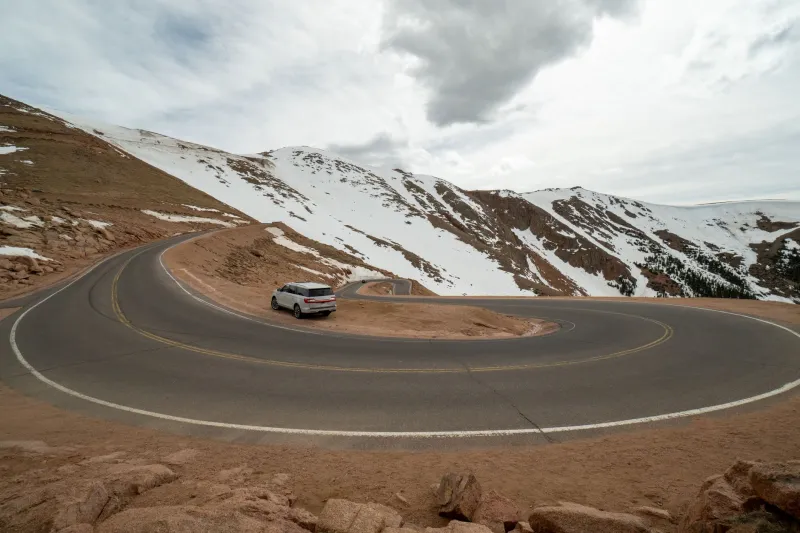
On a downgrade, a loaded trailer pushes your tow vehicle forward. Physics wants that combination to accelerate. Cruise control, sensing that the set speed is being exceeded, does what it's told: it tries to slow things down, usually by reducing throttle and sometimes by applying light braking. On a gentle grade with a modest load, that's manageable.
But add a steep descent — say, coming off the Eisenhower Tunnel on I-70 in Colorado — with a heavy trailer, and you can get into trouble fast. The system may not brake assertively enough to hold speed, and if it triggers your engine brake or transmission downshift aggressively, you can end up with overheated brakes or a trailer that starts pushing harder than your setup can handle.
Sway: The Danger Cruise Control Can't See
Trailer sway is the boogeyman of towing, and it's where cruise control's limitations become genuinely dangerous. Sway typically starts subtly — a gentle side-to-side oscillation that builds if it isn't corrected quickly.
The correct response to sway is to gently accelerate or hold speed while steering into the sway to damp it out — never brake hard, which can make things catastrophically worse. Some experienced towers also manually reduce speed gradually.
The problem is that cruise control may interpret a sway event as a speed variation and respond by modulating throttle in ways that interfere with your ability to correct. Some systems, particularly older ones, don't have any awareness that a trailer is even attached. They're just watching your vehicle's speed, blind to what's happening 30 feet behind the hitch.
Newer trucks with integrated trailer sway control can actually detect and respond to sway by selectively braking individual wheels — but that system works best when the driver is in full control, not when cruise is managing throttle independently.
The Uphill Problem: Hunting and Surging
Grades in the other direction create a different headache. On an uphill climb with a heavy trailer, cruise control will keep demanding more throttle to maintain speed, often holding the transmission in a lower gear and running the engine near its peak load for extended periods.
This "hunting" behavior — where the transmission keeps searching for the right gear — is hard on drivetrain components and can lead to overheating in severe cases. Experienced towers know to disengage cruise on long climbs, set a comfortable speed manually, and let the vehicle breathe.
What the Pros Do Instead
Talk to anyone who tows seriously — RV owners, horse trailer haulers, equipment movers — and they'll tell you the same thing: on the road with a load, you drive it yourself.
That means staying engaged with your speed, using engine braking and exhaust brakes proactively on descents rather than reacting to speed creep, and adjusting your pace based on what the road is doing well before you get to a grade.
For long highway stretches on flat terrain with a modest load, cruise can still be useful — but the definition of "modest" varies by your truck's tow rating, your trailer's weight distribution, and how well your setup is balanced. A properly loaded trailer with a good weight distribution hitch and functioning trailer brakes is a very different animal than a nose-heavy load on a lightweight hitch.
Technologies That Actually Help When Towing
The good news is that the industry has been building tow-smarter features for years. Here's what's worth knowing about:
Integrated Trailer Brake Controllers — These sync your trailer's brakes with your tow vehicle's braking, reducing the push effect on descents. Essential for anything over about 3,000 pounds.
Tow/Haul Mode — Available on most modern trucks and SUVs, this recalibrates the transmission shift points to reduce hunting on grades and improves engine braking. Use it every time you're loaded up.
Adaptive Cruise With Trailer Detection — Some newer systems, like Ford's Pro Trailer Backup Assist ecosystem or GM's towing tech suite, can actually account for trailer length and weight in their calculations. These are meaningfully better than standard cruise when towing, though still not a substitute for an engaged driver.
Downhill Speed Control — A feature on some trucks and SUVs that maintains a set descent speed without driver input, specifically designed for controlled downhill situations. Much more appropriate than standard cruise on a grade.
The Bottom Line for Towers
Cruise control isn't your enemy — it's just a tool that was built for a specific job, and towing isn't that job. Respect the physics, understand what your system can and can't see, and when in doubt, drive it yourself. The open road is more forgiving when you're the one making the decisions.