Mountains Don't Play Nice With Cruise Control — Here's How to Handle It
Mountains Don't Play Nice With Cruise Control — Here's How to Handle It
You've had your cruise control locked in for the past three hours. Traffic is light, the road is flat, and you're making great time. Then the highway starts climbing. Within a mile, you notice your engine winding up harder than usual. A few miles later, you crest the ridge and start descending — and suddenly you're five miles per hour over your set speed before you even realize it.
Welcome to mountain driving. It's a completely different animal, and your cruise control knows it.
Whether you're threading through the Rockies on I-70, winding up through the Appalachians on I-81, or climbing into the Sierra Nevada on US-50, hilly terrain exposes the limitations of conventional cruise control in ways that flat-road drivers simply never encounter. Understanding what's going on — and how to respond — is the difference between a confident, comfortable drive and a stressful, fuel-burning slog.
What Cruise Control Is Actually Trying to Do
At its core, cruise control has one job: maintain a set speed. On flat ground, that's pretty straightforward. The system monitors your actual speed against your target speed and adjusts throttle accordingly. Simple feedback loop, minimal drama.
But when the road tilts, that loop gets a lot more complicated. Gravity becomes a third party in the conversation, and it doesn't care about your set speed at all.
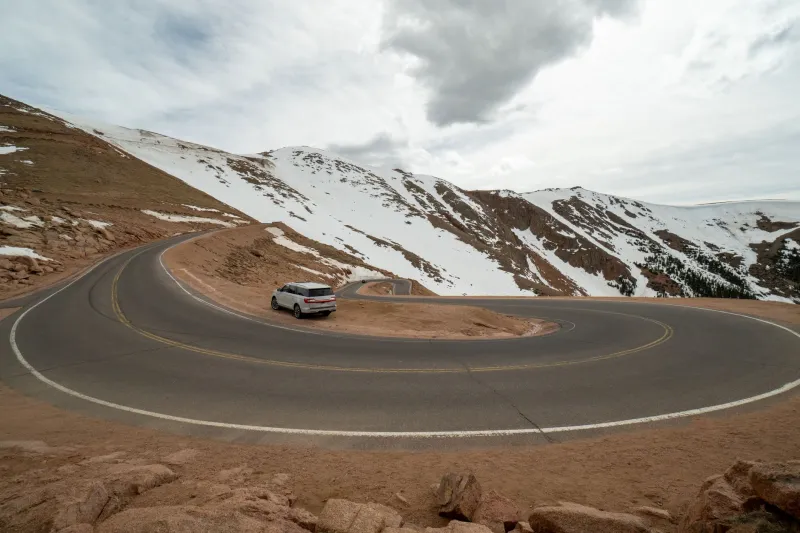
On an uphill grade, gravity is working directly against forward momentum. Your engine has to produce significantly more power just to maintain the same speed. On a downhill grade, gravity is doing the opposite — pushing the vehicle forward and threatening to blow past your set speed without any throttle input at all.
Your cruise control is constantly reacting to both of these scenarios, and depending on whether you've got a classic throttle-only system or a modern adaptive setup, the experience can range from slightly annoying to genuinely concerning.
The Climb Problem: Why Your Engine Sounds Angry
Here's what happens when conventional cruise control hits a steep uphill: it opens the throttle wide trying to hold your speed. If the grade is long and severe enough, the system may max out the throttle entirely and still lose ground. Your speed drops, the transmission may kick down a gear (sometimes two), and the engine revs hard.
This isn't just uncomfortable — it's wearing on your drivetrain. Extended wide-open-throttle climbing at high elevation also means thinner air, which reduces combustion efficiency and makes the engine work even harder for the same output. Turbocharged engines handle this a bit better since the turbo compensates for reduced air density, but naturally aspirated engines feel the altitude hit more directly.
Practical tip: On long, sustained climbs — think the stretch of I-70 between Denver and the Eisenhower Tunnel — consider dropping your cruise speed by 5 to 8 mph before you hit the grade. You'll still be moving at a solid pace, but you give your engine a fighting chance to maintain that speed without maxing out. Your transmission will thank you, and you'll burn less fuel overall.
The Descent Problem: When Cruise Control Becomes a Speed Trap
If climbing stresses the engine, descending can stress your brakes — and your nerves.
Conventional cruise control has no ability to apply the brakes. It can only cut throttle. So when you're rolling downhill and gravity is accelerating the vehicle, the system simply closes the throttle and hopes physics cooperates. Often, it doesn't. You'll creep past your set speed, the system will cut throttle entirely, and you'll keep accelerating anyway because the hill is doing all the work.
This is the speed surge problem, and it's the reason experienced mountain drivers often disengage cruise on steep descents altogether. The system isn't broken — it's just hitting the wall of what throttle-only control can do.
Long descents in places like the eastern slope of the Cascades or the drop off the Blue Ridge Parkway can run for several miles. On grades like that, relying on conventional cruise to manage your speed isn't just uncomfortable — it can leave you braking hard to compensate, which builds heat in your brake rotors and risks fade on extended runs.
Practical tip: On significant descents, disengage cruise and use engine braking by manually selecting a lower gear (or using your paddle shifters if you have them). Let the drivetrain do the work of slowing the vehicle before you ever touch the brake pedal. This is especially important if you're towing or hauling extra weight.
How Adaptive Cruise Control Changes the Game
Modern adaptive cruise control systems — the kind you'll find on most new trucks, SUVs, and sedans sold in the last few years — bring a fundamentally different approach to mountain terrain.
The big upgrade is predictive grade logic. Higher-end adaptive systems use GPS and topographic data to anticipate upcoming grades and pre-adjust throttle and transmission behavior before the vehicle even hits the slope. Instead of reacting to the hill after the fact, the system is already preparing.
More critically, many adaptive systems can apply the brakes. When gravity starts pushing the vehicle past the set speed on a descent, the system doesn't just cut throttle — it actively brakes to hold the target. This is a massive functional difference from classic cruise control, and it makes mountain driving dramatically more relaxed.
Some systems, particularly on trucks and larger SUVs, also integrate trailer sway control and descent assist that work in concert with adaptive cruise. If you're hauling a camper through the Rockies, these features aren't just convenient — they're legitimately safer.
That said, even adaptive cruise has limits. On very steep grades or tight switchbacks, the system may struggle to keep up with rapid elevation changes. It's still a driver-assist tool, not an autopilot.
Elevation and Engine Performance: The Altitude Factor
There's another mountain variable that doesn't get talked about enough: altitude itself.
As you climb above 5,000 feet — and plenty of mountain routes push you past 10,000 feet — the air gets thinner. Less oxygen per cubic foot means less combustion power per engine cycle. Naturally aspirated engines can lose 3 to 4 percent of their power for every 1,000 feet of elevation gain above sea level. By the time you're at 10,000 feet, you might be running at 70 to 75 percent of your sea-level power output.
Your cruise control doesn't know about altitude. It just knows your speed is dropping and keeps opening the throttle. This is why the engine strain on mountain climbs can feel so much more intense than a simple steep grade on a flat-elevation highway.
If you're driving a turbocharged vehicle, you have a genuine advantage here. The turbo boosts intake pressure and partially compensates for thinner air. But you'll still notice the difference at serious elevation.
Practical Mountain Cruise Control Strategy
Pull these together into a simple game plan before you head into the hills:
Before the climb: Reduce your cruise set speed by 5–8 mph on long, sustained grades. Don't wait until you're already losing momentum.
During the climb: If you hear the transmission hunting between gears repeatedly, manually select a lower gear or disable cruise and manage the throttle yourself.
On the descent: For grades longer than a mile, disengage cruise and use engine braking. If you have adaptive cruise with active braking, you can test it on moderate grades, but stay ready to take over.
At altitude: Expect reduced power output. Don't fight your engine — work with it.
General rule: If the road is doing something dramatic, your hands should be more involved, not less.
Mountain driving is genuinely one of the most rewarding experiences American roads have to offer. The views alone are worth the trip. But the terrain demands a more engaged driver than a long flat interstate does. Know your system's limits, adjust your strategy for the grade, and you'll handle those elevation changes with confidence — which is exactly what staying in control is all about.