Does Your Insurer Know You Use Cruise Control? The Answer Might Surprise You

Photo: telematics device plugged into car OBD port dashboard insurance, via i.pinimg.com
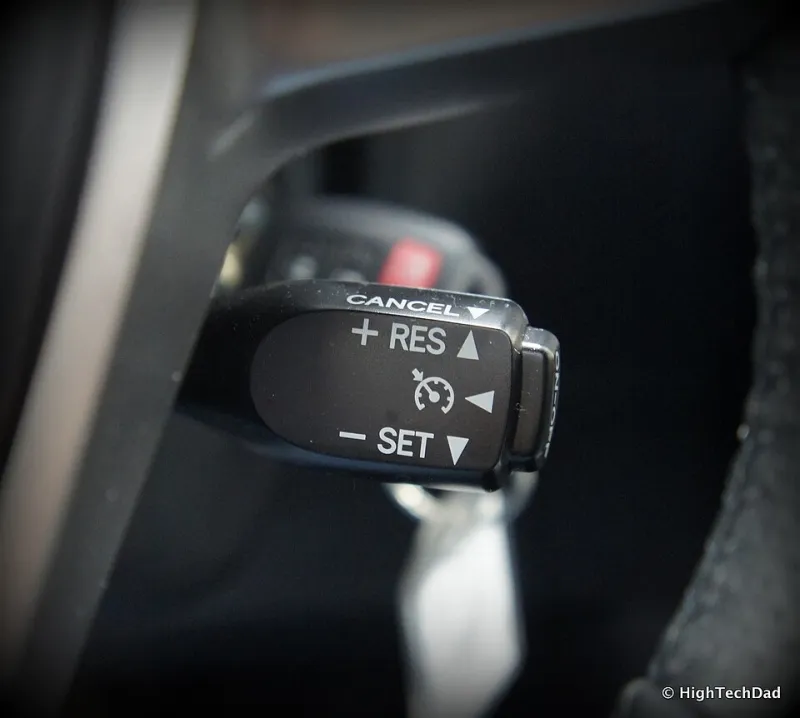
You pop the cruise on at 65 mph, settle into your seat, and think you're doing everything right. Smooth speed, steady throttle, no jackrabbit stops. Good driver stuff. But somewhere in a server farm, your insurance company's telematics algorithm is quietly forming an opinion about you — and it might not be the one you expect.
The relationship between cruise control habits and car insurance premiums is one of those slow-burn topics that rarely makes the headlines but quietly affects millions of American drivers. We spent time digging into how usage-based insurance (UBI) programs actually evaluate driving behavior, and the picture is more nuanced than a simple thumbs-up or thumbs-down on cruise control.
What Telematics Devices Are Actually Tracking
If you've ever plugged a dongle into your OBD-II port for a discount program — think Progressive's Snapshot, State Farm's Drive Safe & Save, or Allstate's Drivewise — you've handed your insurer a live feed of your driving behavior. These devices (and their smartphone app equivalents) monitor things like:
- Hard braking events — sudden deceleration above a certain g-force threshold
- Rapid acceleration — punching the gas aggressively from a stop or at speed
- Speeding — time spent above posted limits
- Late-night driving — insurers consider nighttime hours higher risk
- Phone use — some apps can detect distracted driving patterns
Cruise control doesn't get its own checkbox on any of these dashboards. But here's the thing: cruise control behavior shows up clearly in the data whether the system labels it or not.
"We don't specifically tag a trip as 'cruise control on' or 'cruise control off,'" explained one telematics data analyst who works with a major national insurer and asked to remain unnamed. "But a driver who maintains a consistent 67 mph for 45 minutes with zero throttle spikes looks completely different from someone who's constantly surging and backing off. The algorithm picks that up."
In other words, smooth cruise control usage tends to produce a cleaner behavioral signature — and cleaner signatures generally translate to better scores.
Where Cruise Control Users Actually Win
The strongest case for cruise control in the eyes of insurers comes down to two factors: speed consistency and hard braking reduction.
Drivers who use cruise control on the highway are far less likely to accumulate speeding flags. You set it at 70, it stays at 70. You're not drifting up to 78 while zoning out to a podcast. Telematics programs are particularly sensitive to sustained speeding — not just brief spikes — and cruise control is almost a mechanical guarantee against that pattern.
The hard braking piece is a little more complicated. Cruise control by itself doesn't eliminate hard stops; if traffic suddenly piles up ahead and you're on cruise, you still have to brake hard. But research from the Insurance Institute for Highway Safety (IIHS) and several university traffic studies consistently shows that cruise control users on open highways demonstrate fewer sudden deceleration events than drivers manually managing their speed. The theory is simple: steady speed means you're not closing gaps as aggressively.
According to a 2022 analysis published by the LexisNexis Risk Solutions group, drivers who exhibited consistent highway speed patterns — a strong proxy for cruise control use — scored an average of 11% better on telematics-based risk assessments than drivers with erratic speed profiles.
The Scenarios Where It Can Work Against You
Here's where it gets interesting. Cruise control isn't universally beloved by insurance algorithms, because the data can tell a different story depending on how you use it.
Urban and suburban driving with frequent cruise engagement can actually produce more hard braking events, not fewer. The system accelerates back to your set speed between lights or after lane changes, and then you're slamming the brakes when the car ahead slows. That pattern shows up as aggressive driving behavior in telematics data, even though technically you were just using a built-in feature.
There's also the issue of following distance. Traditional cruise control doesn't adjust for traffic — it just holds speed. Drivers who ride with cruise on in moderate traffic and then brake hard repeatedly are racking up negative marks without even realizing it. Adaptive cruise control (ACC), by contrast, manages following distance dynamically, which tends to produce far smoother deceleration data.
"The honest answer is that adaptive cruise control users are almost universally our best-scoring telematics customers," the analyst told us. "They're maintaining safe following distances automatically, they're not speeding, and their braking patterns are gentle. That's a dream profile."
What the Major Insurers Aren't Telling You
None of the big players — GEICO, Progressive, State Farm, Allstate — publicly advertise a cruise control discount. That's partly because they can't verify what features you're using, and partly because the benefit is already baked into the behavioral scoring.
What they are doing is quietly rewarding the outcomes that cruise control tends to produce: steady speeds, minimal hard braking, low speeding incidents. If you use cruise control correctly and your telematics score reflects that, you're likely already getting the financial benefit — you just don't see it labeled as a cruise control reward.
The flip side: if you're using cruise control in ways that generate bad data (heavy traffic, constant hard stops, aggressive re-acceleration), you might actually be hurting your score relative to a driver who simply moderates their own speed manually.
How to Make Your Driving Data Work for You
If you're enrolled in a telematics program or considering one, here are a few practical takeaways:
- Use cruise control on open highways, not in stop-and-go traffic. Save it for interstates and long rural stretches where it can do what it does best.
- If you have adaptive cruise control, use it. The smooth following distance management is a genuine scoring advantage.
- Check your telematics app regularly. Most programs show you where you're losing points. If hard braking is a recurring flag, think about whether your cruise control habits in traffic are contributing.
- Ask your insurer directly. Some companies offer phone or chat support specifically for explaining your telematics score. It's worth a 10-minute call.
The bottom line? Cruise control isn't secretly taxing your insurance — but it's not automatically saving you money either. Used smartly, it produces exactly the kind of driving behavior that telematics programs reward. Used carelessly in the wrong conditions, it can muddy your data. Drive smarter, and let the numbers follow.