Why Adaptive Cruise Control Is Rewriting the Unwritten Rules of American Highways
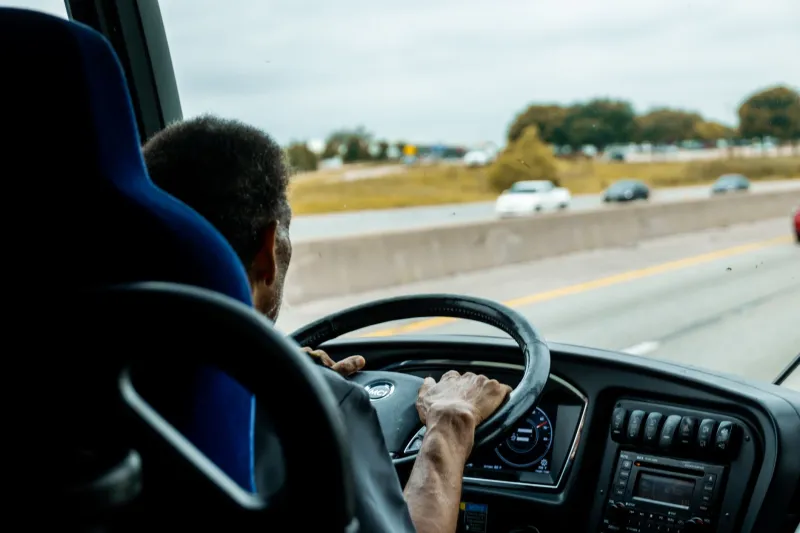
Picture this: You're cruising down I-70 somewhere between Kansas City and Denver, traffic moving at a steady 72 mph, and the guy behind you is riding so close you can practically read his bumper sticker prescription. You've got your adaptive cruise control locked in, maintaining a clean three-second gap from the semi ahead. The tailgater is losing his mind.
Welcome to one of the most quietly disruptive shifts happening on American highways right now.
Adaptive cruise control — ACC for short — isn't new. But as it trickles down from luxury vehicles into everyday trucks, crossovers, and sedans, it's hitting a cultural wall that no software update can fix: American driving habits. And the collision between what the tech wants to do and what drivers expect from each other is producing a whole new flavor of road friction.
The Gap That's Driving People Crazy
Here's the thing about ACC: it follows the rules. Like, actually follows them. Most systems default to a following distance somewhere between two and four seconds depending on your speed setting, which is right in line with what every state driving manual recommends. That sounds great on paper.
In practice, though, American highway culture has never been especially enthusiastic about those guidelines. Anyone who's driven the 405 in LA or I-95 through New Jersey knows that "two seconds" can feel like an open invitation to cut in. And when an ACC-equipped vehicle maintains that gap faithfully — not speeding up to close it, not flinching when someone slides in — it creates a visible pocket that other drivers can't resist.
Drivers in online forums dedicated to vehicles like the Toyota RAV4, Ford F-150, and Hyundai Sonata frequently describe the same experience: their ACC holds a safe following distance, someone merges into that space, the ACC slows to re-establish the gap, and then another driver fills that new gap. Repeat indefinitely. What started as a comfortable highway cruise turns into a slow-motion accordion effect.
Is it dangerous? Not inherently. Is it maddening? Absolutely.
Highway Patrol Has Noticed Something Interesting
Trooper-level observations about ACC behavior aren't exactly flooding the research literature, but traffic safety officers across several states have started commenting on a pattern: vehicles equipped with ACC tend to hold steadier speeds and more consistent spacing than human-driven vehicles in similar conditions.
From a pure collision-avoidance standpoint, that consistency is a win. Rear-end crashes — which account for roughly 29% of all crashes according to NHTSA data — are heavily influenced by following distance and reaction time. An ACC system doesn't get distracted, doesn't rubberneck, and doesn't brake-check anyone out of frustration. It just... maintains.
But officers also note that the gap-maintenance behavior can create confusion, particularly during merges and lane changes. Drivers who aren't used to a vehicle that won't speed up to block someone from merging sometimes overcorrect — either slamming the accelerator to override the system or, worse, disengaging ACC at exactly the wrong moment and introducing unpredictability into an otherwise stable traffic flow.
Is This Actually Making Drivers Better, or Just More Annoyed?
Here's where the opinion-forward part of this conversation gets real: there's a legitimate argument that ACC is functioning as an involuntary driving school for millions of Americans.
When your car consistently holds a proper following distance, you start to internalize what that distance actually looks like. When your ACC brakes smoothly for a slowdown instead of you jamming the pedal at the last second, you experience what controlled deceleration feels like. Some drivers — particularly newer ones — report that driving with ACC has made them more aware of spacing and anticipation when they're driving in manual mode.
That's not nothing. That's actually kind of remarkable.
On the flip side, there's a counter-argument that ACC is creating a passive driver problem. If your car is doing the distance management for you, are you really learning anything? Or are you just a passenger who occasionally steers? The risk of over-reliance on driver assistance tech is real, and it's a conversation the industry is actively wrestling with.
The honest answer is probably both things are true simultaneously. For attentive drivers who treat ACC as a tool, it reinforces good habits. For checked-out drivers who treat it as autopilot, it might be masking a skills deficit that shows up badly the moment the system disengages.
Merge Behavior: The New Battleground
If following distance is where ACC frustrates tailgaters, merge behavior is where it's rewriting the social contract entirely.
Traditional American highway culture — particularly in high-traffic corridors like Atlanta's I-285 or Chicago's I-90 — involves a lot of unspoken negotiation. You flash your lights, you inch forward, you make eye contact in the mirror. It's chaotic and informal, but it works because everyone's operating on the same emotional wavelength.
ACC-equipped vehicles don't negotiate. They respond to physics and sensors. If someone signals to merge, the ACC may slow to create space — not as a courtesy gesture, but as a collision-avoidance response. From the merging driver's perspective, that might feel like cooperation. From the driver three cars back who just had to brake unexpectedly, it feels like the car in front did something random.
This is where some of the newer ACC systems are genuinely impressive. Automakers like Subaru (EyeSight), Toyota (Toyota Safety Sense), and GM (Super Cruise in select models) have refined their systems to handle merge scenarios more smoothly, with gentler deceleration curves and better prediction of surrounding vehicle intent. The tech is getting smarter. The human reaction to the tech is lagging behind.
The Bigger Picture: A Highway Culture in Transition
American drivers have always had a complicated relationship with driving rules. We treat speed limits as suggestions, following distances as optional, and turn signals as a sign of weakness in heavy traffic. It's cultural, it's deeply ingrained, and it's not going away overnight.
But here's what's interesting: the highways are increasingly populated by vehicles that don't share that cultural programming. ACC systems follow the rules because that's what they're coded to do. And as more of these vehicles hit the road — and the numbers are growing fast, with ACC now standard or available on the majority of new vehicles sold in the US — the aggregate behavior of traffic is slowly shifting.
You can get mad at the car in front of you for leaving "too much" space. You can tailgate it, honk at it, pass it in a huff. But you're basically arguing with a sensor array that doesn't have feelings and is, statistically speaking, probably right about the following distance.
Maybe that's the quiet revolution here. Not that ACC is making everyone a better driver overnight, but that it's introducing a persistent, non-negotiable element of rule-following into an environment that's been running on vibes and aggression for decades.
Some drivers are furious about it. Others say it's the best thing to happen to long-haul highway driving since the interstate system itself.
Where do you land? Honestly, the answer probably says a lot about how you drive — and whether your cruise control is doing more for highway safety than you're willing to admit.