What Bad Weather Is Really Telling You When Your Cruise Control Gets Weird
When the Weather Changes, So Does Your Car
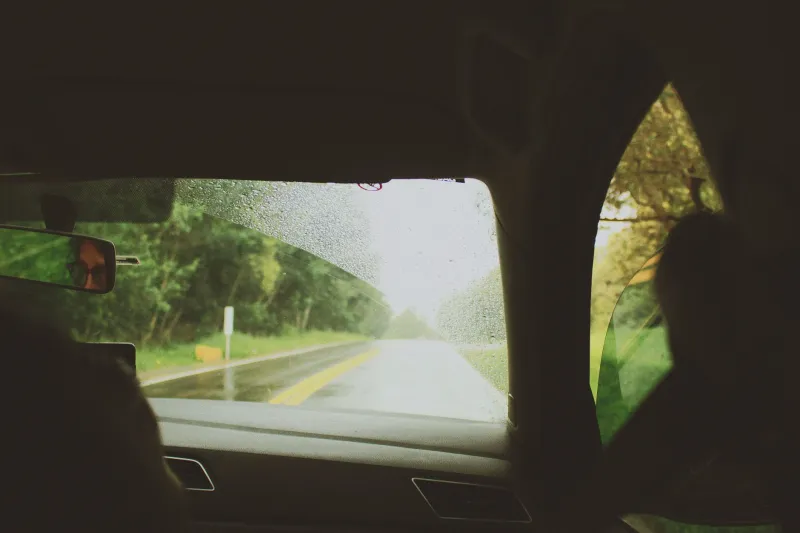
You're cruising down the interstate on a Tuesday afternoon, speed locked in, coffee in the cupholder, life is good. Then the sky opens up. Rain hammers the windshield, the road surface turns slick, and suddenly your cruise control starts behaving like a different system entirely — surging, hesitating, or just flat-out disengaging on its own.
Frustrating? Sure. But here's the thing: that behavior isn't a glitch. It's actually your vehicle doing exactly what it's supposed to do. The problem is most drivers don't know how to read those signals, so they either ignore them or start worrying they've got a mechanical problem on their hands.
Let's break down what's actually going on — because understanding it makes you a smarter, safer driver.
Rain: The Traction Problem Nobody Talks About Enough
Modern cruise control systems — especially adaptive ones — are deeply tied into your car's stability and traction control networks. These systems are constantly monitoring wheel speed sensors, throttle response, and in many newer vehicles, road surface feedback.
When rain hits, the road's friction coefficient drops. Your tires can't grip the same way they did on dry pavement, and your wheel speed sensors pick up on that instantly. If one wheel starts spinning even slightly faster than the others — a sign of reduced traction — the system may interpret that as instability and back off the throttle or disengage cruise entirely.
This isn't a malfunction. It's a safety feature working as intended. The car is essentially saying, hey, I can't guarantee I'll stop you safely at this speed right now.
The practical takeaway: if your cruise keeps cutting out in wet conditions, don't keep re-engaging it. That repeated disengagement is a warning, not a nuisance.
Fog and Low Visibility: When the Eyes of Your Car Go Blind
Adaptive cruise control systems rely on radar, lidar, or camera-based sensors to detect vehicles ahead and maintain a safe following distance. Those sensors are mounted behind your grille, near your windshield, or in your front bumper — and they're surprisingly sensitive to environmental interference.
Dense fog is one of the biggest culprits. Water droplets suspended in the air can scatter radar signals and confuse camera-based systems, causing the adaptive cruise to behave erratically — braking for nothing, failing to detect a vehicle ahead, or becoming sluggish in its response time.
Some vehicles will display a warning message telling you the system's sensing capability is reduced. Others just quietly degrade in performance without alerting you at all. That second scenario is the one worth being cautious about.
If visibility is low enough that you're straining to see the road, your car's sensors are probably struggling just as much as your eyes are. Manual control isn't just a backup plan in those conditions — it's the right call.
Ice and Snow: The Full System Stress Test
Icy roads take everything we just talked about and amplify it. Traction loss is more severe, stopping distances stretch dramatically, and your cruise control system is working with sensors that may be physically blocked by snow and ice buildup on the front of your vehicle.
Here's a scenario that catches people off guard: you're driving on a partially cleared highway, cruise set at a comfortable speed. You hit a patch of black ice. Your wheels slip. The stability system kicks in, cuts engine power, and disengages cruise — all in under a second. That's the system doing its job perfectly.
But if you immediately re-engage cruise control on a road that still has icy patches ahead, you've just overridden the warning. The car protected you once. The next time, it might not react fast enough.
On snow and ice, most driving safety experts — and frankly, most automakers in their owner's manuals — recommend keeping cruise control off entirely. The reaction time required to manage wheel slip manually is simply faster and more nuanced than what automated systems are designed to handle in those extremes.
Heat and Highway Shimmer: The Overlooked Summer Problem
Cold weather gets all the attention, but extreme heat has its own set of cruise control quirks. In the American Southwest especially — think Arizona in July, Nevada in August — road surface temperatures can exceed 150°F. That heat creates thermal shimmer, the wavy optical distortion you see rising off the pavement.
Camera-based cruise control systems can misread that shimmer as objects in the road, causing phantom braking events — sudden, unexpected deceleration when there's nothing actually in front of you. It's startling, and if there's a car behind you that isn't expecting it, it can be genuinely dangerous.
High ambient temperatures can also affect sensor calibration over time. If you notice your adaptive cruise behaving inconsistently on hot days, it's worth having your dealer check sensor alignment — especially if the issue persists after the temperature drops.
Warning Signs You Might Be Misreading
Here are a few common cruise control behaviors in bad weather that drivers often chalk up to mechanical failure — but are usually the system communicating:
- Repeated self-disengagement in rain: Traction or stability control is intervening. Don't keep re-engaging.
- Phantom braking on foggy roads: Sensor interference from water droplets. Switch to manual.
- Speed creeping above your set point on a downhill in wet conditions: The system may be struggling to apply braking force consistently on a low-grip surface.
- Warning lights accompanying disengagement: These are diagnostic messages, not random errors. Note what they say and check your owner's manual.
None of these are reasons to panic. They're reasons to pay attention.
The Bottom Line: Cruise Control Rewards the Informed Driver
Cruise control — whether you're running a basic speed-hold system or a full adaptive setup — is a genuinely useful tool. But it's a tool designed for conditions where the car can reliably do what it promises: maintain your speed, hold your following distance, and stop you safely if needed.
Bad weather narrows that window. Rain, fog, ice, and extreme heat all reduce the margin for error that these systems depend on. When conditions get sketchy, the smartest move is to treat cruise control as a fair-weather feature and take back the wheel.
That's not a knock on the technology. It's just knowing how to use it right — and that's exactly the kind of driver these systems were built for.