Why Gen Z Keeps Ignoring Cruise Control — And What It's Costing Everyone on the Road
Photo: young driver hands on steering wheel highway, via a57.foxnews.com
The Button Nobody's Pressing
There's a button on your steering wheel or stalk that a growing chunk of American drivers under 35 basically never touch. It's not broken. It's not hidden. They just… don't use it.
Cruise control adoption among Gen Z and younger millennial drivers has quietly become one of the more interesting behavioral puzzles in modern road safety. Driving instructors across the country are noticing it. Insurance data analysts are flagging it. And the implications stretch way beyond personal preference.
So what's actually going on?
The Numbers Don't Lie — But They Do Surprise
A 2023 survey by the Insurance Institute for Highway Safety found that drivers between 18 and 34 were significantly less likely to engage cruise control on highway trips compared to drivers 45 and older — even when trip conditions were ideal. Open road. Light traffic. Dry weather. Still, a substantial portion of younger respondents said they either rarely or never use it.
That's not a fluke. Multiple driving school operators across states like Texas, Ohio, and California report that cruise control barely comes up in modern driver's ed curricula. Some instructors say they mention it once, maybe twice, before moving on.
"I'd say maybe one in six of my students actually asks how to use it," said one certified driving instructor based in the Dallas metro area who asked not to be named. "The others either don't think about it or assume they'll figure it out later. A lot of them never do."
Is It a Trust Thing?
Here's where it gets genuinely interesting. When you actually talk to younger drivers about why they skip cruise control, the answers split pretty cleanly into two camps.
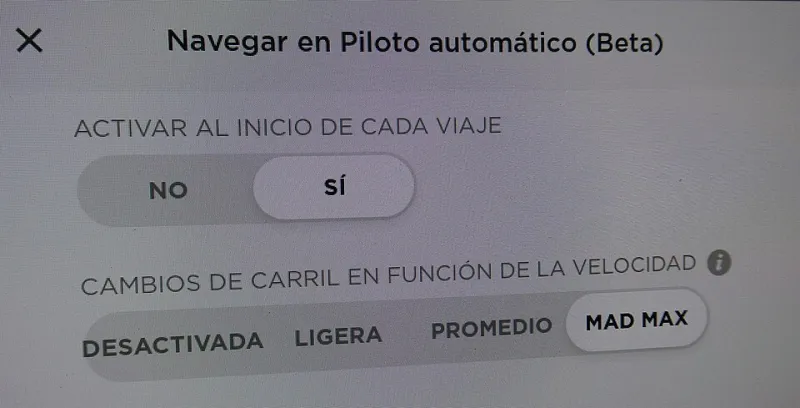
The first group doesn't trust it. Not in a dramatic, conspiracy-theory way — more like a low-grade skepticism about handing over any piece of control to the car. These are often the same drivers who read about Tesla Autopilot incidents, absorbed years of news coverage about self-driving car failures, and came away with a generalized wariness about vehicle automation. To them, cruise control isn't just a convenience feature — it's a category. And that category has been burned.
"I just feel more in control when I'm managing the speed myself," said Marcus, a 26-year-old driver from Atlanta who commutes on I-285 regularly. "After all the stuff I've seen about cars doing weird things on their own, I'd rather just keep my foot on the pedal."
The second group is more pragmatic — or thinks it is. They're not afraid of automation. They're just used to navigating heavy, unpredictable traffic in urban and suburban environments where cruise control genuinely doesn't get much use. If you learned to drive in a city, spent your first years behind the wheel on congested interstates, and mostly take shorter trips, the habit of reaching for that stalk just never formed.
The Skills Gap Nobody Wants to Talk About
This is the part that driving safety advocates find most concerning: there's a real difference between not using cruise control because you've made a conscious choice and not using it because you literally don't know how.
A 2022 AAA study on driver technology familiarity found that a notable percentage of younger drivers couldn't correctly identify or explain the function of cruise control features in their own vehicles — including basic speed-set functions that have been standard for decades. Adaptive cruise control fared even worse in terms of comprehension.
That's a skills gap, and it has downstream consequences. Drivers who don't use cruise control on long highway trips are more likely to experience speed creep — gradually accelerating above their intended speed without realizing it. They're also more prone to fatigue-related speed variability, which creates unpredictability for surrounding traffic.
Speed consistency, it turns out, is one of cruise control's underrated safety contributions. When a driver maintains a steady 70 mph rather than drifting between 67 and 74, the vehicles around them can predict behavior more reliably. Multiply that inconsistency across thousands of young drivers on a busy interstate and you've got a subtle but real safety drag.
The Irony of the Automation-Averse Generation
Here's the twist that makes this whole thing fascinating: Gen Z is, by almost every measure, the most tech-comfortable generation in American history. They trust apps, algorithms, and AI assistants with enormous amounts of their daily lives. But they're skeptical of a technology that's been safety-tested for more than 50 years.
The explanation, according to behavioral researchers, likely comes down to perceived control. Handing your Spotify queue to an algorithm feels low-stakes. Handing your highway speed to a system feels different — more physical, more consequential. The psychological weight of vehicle control is just heavier, even when the actual risk calculus favors automation.
There's also a generational media diet factor. Younger drivers grew up consuming content about autonomous vehicle failures, Waymo incidents, and Tesla crashes. Traditional cruise control got lumped into that mental category even though it's a fundamentally simpler, more proven technology.
What This Means Going Forward
Driving safety organizations are starting to pay attention. There are early conversations in some states about updating driver's education requirements to include more hands-on instruction with cruise control and adaptive cruise systems — not just a mention in a textbook, but actual practice.
Insurance analysts are also watching closely. If younger drivers are statistically more likely to experience speed variability and fatigue-related incidents on long highway stretches, that could eventually show up in actuarial models.
For now, the gap is more of a quiet concern than a crisis. But the trend is real, and it's worth taking seriously — especially as adaptive cruise control and semi-autonomous driving systems become more prevalent in new vehicles. If younger drivers don't trust basic cruise control, getting them comfortable with more sophisticated systems is going to be an uphill climb.
The road gets a lot safer when everyone on it is driving smarter. And sometimes driving smarter means actually using the tools your car already gave you.